
Cost
How much does dry riser testing cost?
Dry riser testing cost is set by what is installed, not by the size of the building. The count of risers and landing valves comes first, then which BS 9990 visit it is, the height, the access to every floor and the condition the riser is found in.
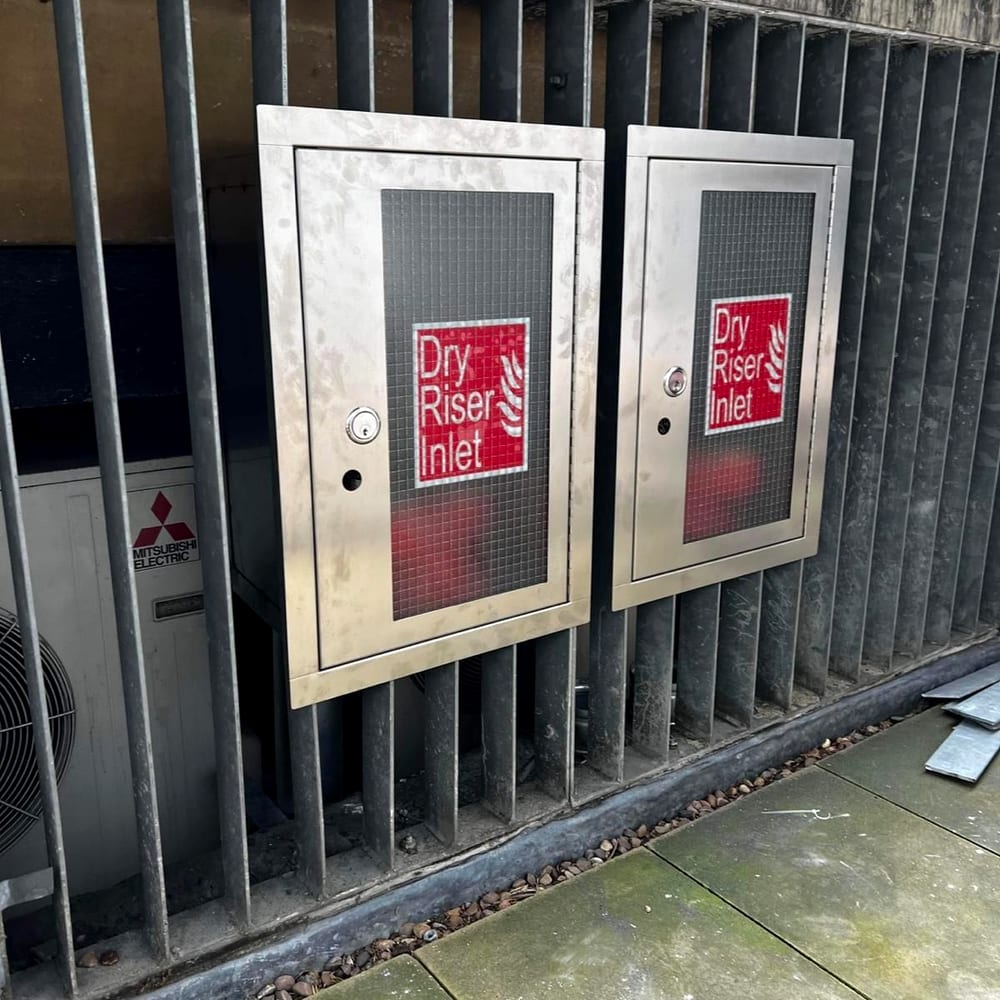
We do not publish a price list for dry riser testing, and this guide explains why rather than avoiding the question. What it gives you instead is what actually decides the number, so you can read a quotation and tell whether two of them are pricing the same job.
Sentry Sprinkler Protection tests dry risers to BS 9990 across England and prices every building after a free survey, with a fixed figure in writing. If you want the riser tested rather than read about, that is dry riser testing.
Why a dry riser has no standard price
A dry riser is priced from what is installed and how hard it is to reach, and neither can be read off a postcode or a floor area.
Two blocks of the same height on the same street can be very different jobs. One has a single riser, an inlet cabinet at the front door and landing valves on an open stair. The other has two risers, an inlet behind a bin store and outlets behind locked doors on every landing. They look the same from the road.
A figure given before anyone has counted that is a figure that moves, and a price that moves reads as a rise however honest it is. So the count comes first.
What decides the cost of dry riser testing
1. Which visit it is
BS 9990 asks for two things, and they are priced differently.
- The six-monthly visual inspection. Inlets, landing valves, cabinets, caps and chains, signage and the access route to each outlet, all looked at and recorded.
- The annual pressure test. The riser is filled, charged to 12 bar and held for 15 minutes, then drained, with every landing valve proved.
A quotation that covers only one of them is a different product from one that covers both. Check which you are being offered. The intervals are set out in full in BS 9990 explained.
2. How many risers
Each riser is tested on its own, and a larger building often has more than one. Two risers is two tests.
3. How many landing valves
Every outlet is inspected at the six-monthly visit and proved at the annual one. A six-storey block with two risers has twelve of them. The landing valve count, more than the floor area, is what turns a short visit into a long one.
4. Height
The taller the riser, the longer it takes to fill, hold and drain, and the more water has to go somewhere afterwards. The test needs a water source on site and somewhere for the drain-down to go, which is simple at ground level and less so on a tight urban site.
5. Access to every floor
The item most often missing from a cheap quotation. Each landing valve has to be reached and opened, so cabinets need to be unlocked on every level. In an occupied residential block that can mean a resident letting the engineer onto a landing, floor by floor.
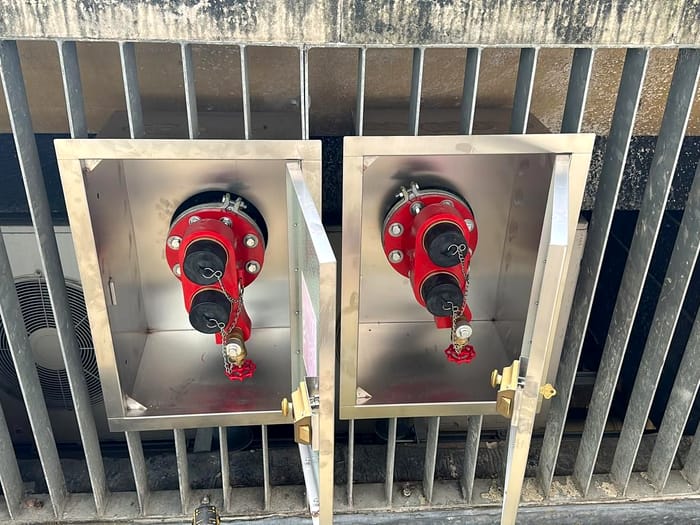
The inlet matters just as much. It is the one part the fire service uses, and the part most likely to be painted over, blocked by a bin store or locked with a key nobody can find.
6. The condition it is found in
A riser tested every year is quick. One that has not been looked at in years is not: missing caps and chains, seized valves, vandalised inlets, cabinets painted shut. Those are findings, not part of the test, and they should be priced separately so you can see each one.
7. When the work can happen
Testing a riser in a busy office, a hotel or a block with people moving in and out is planned around the building. Work outside normal hours costs more, and in some buildings it is still the right call. A good quotation prices both so you can choose.
8. How many buildings
A managing agent with several blocks priced together pays less per block than the same blocks priced one at a time, because the visits are planned into one route and the certificates come back together. Say so at the first conversation.
What the testing price should not include
Repairs. A test that finds a leaking landing valve, a perished washer or a damaged inlet box should end with a list: each defect photographed, explained and priced on its own line. You approve what gets done. Anything else makes it impossible to tell what the test itself cost.
The certificate, on the other hand, belongs in the testing price. It is issued on the visit, and it is the document your fire risk assessment and your insurer will ask to see.
How to compare two dry riser testing quotes
- Does it name BS 9990? A quotation that names no standard gives you nothing to measure the work against afterwards.
- Does it cover both visits? The six-monthly inspection and the annual pressure test, or only one?
- Is it per riser? A single figure for a building with four risers, treated as one test, is cheaper on paper and leaves three of them unproved.
- Does it include the certificate? It should, issued on the day.
- Are repairs priced separately? Line by line, with photographs, not as a lump allowance.
If you want to see what a proper inspection looks at before you compare, our dry riser inspection checklist is free to print and covers every item, floor by floor.
Who pays for it
The duty sits with the responsible person under the Fire Safety Order, usually the freeholder or the managing agent in a block. Who bears the cost is a question for the lease and the service charge, which is covered in BS 9990 explained.
Getting a fixed price
Send us the address, the number of storeys, how many risers if you know, where the inlet is and the date of the last certificate. The survey that follows is free, and the fixed price comes back in writing before anything is booked. You can book a free survey or ring us.
This work, on our sites
Questions we get asked
Is dry riser testing priced per riser or per building?
Per riser, and then by the number of landing valves on it. Each riser is charged and held at 12 bar separately at the annual test, and every landing valve is inspected and proved. A building with two risers is two tests, not one longer one, so a price per building only makes sense once somebody has counted them.
Why is the annual dry riser test dearer than the six-monthly inspection?
Because it is a different job. The six-monthly inspection is visual: inlets, landing valves, cabinets, caps, signage and access. The annual test fills the riser, charges it to 12 bar, holds it for 15 minutes, then drains it and makes good, with pump and hose equipment brought to site.
Are dry riser repairs included in the testing price?
They should not be. Missing caps, perished washers, seized landing valves or a damaged inlet are found by the test and priced separately, line by line, so you can see what each one costs and approve it. An allowance for unknown repairs hidden inside a test price is a number you cannot check.
How do I get a fixed price for dry riser testing?
Tell us the address, how many storeys, how many risers if you know, where the inlet is and when the last certificate was issued. We survey first, free, and put a fixed price in writing before anything is booked.
Where this comes from
- BS 9990Non-automatic fire-fighting systems in buildings. Code of practice
Dry and wet risers, and private fire mains. The source of the six-monthly inspection and the annual pressure test.
BSI
British Standards are copyright documents and most are bought rather than read free. We hold the ones we work to. If you need to know what one of them says about your building, ask us rather than buying it.