
Sprinklers
Do fire sprinklers detect smoke or heat?
Fire sprinklers detect heat, not smoke. Each head has its own glass bulb or fusible link that breaks at a set temperature, usually 68 °C, and only the heads heated that far open. Smoke, steam or burnt toast cannot set one off, says Sentry Sprinkler Protection, which services these systems across England.
Fire sprinklers detect heat, not smoke. A sprinkler head is a plug in a pipe that is full of water under pressure, held shut by a small heat-sensitive part. When that part gets hot enough it breaks, the plug falls out and water sprays onto the fire below. Sentry Sprinkler Protection services and repairs these systems in commercial buildings, and this answer explains what actually makes a head open and what does not.
What is inside a sprinkler head
Every head is held shut by one of two things:
- A glass bulb, filled with a liquid that expands as it warms. At the rated temperature the liquid has expanded enough to shatter the glass. The colour of the liquid tells you the rating.
- A fusible link, two plates soldered together. At the rated temperature the solder melts and the plates pull apart.
Either way, there is no electronics, no wiring and no connection to the fire alarm panel. The head is its own detector, and it detects one thing: the temperature of the air around it.
The temperature a head is set to
BS EN 12845, the standard commercial sprinkler systems in the UK are designed to, says a head must be rated close to, but no lower than, 30 °C above the highest temperature the space will normally reach (clause 14.4). In an ordinary heated building that gives one of two ratings:
| Rating | Bulb colour | Where you find it |
|---|---|---|
| 68 °C | Red | Most offices, shops, warehouses and flats |
| 74 °C | Fusible link, uncoloured yoke | The common alternative to the red bulb |
| 79 °C | Yellow | Warmer areas |
| 93 °C to 100 °C | Green | Under roof glazing, in unventilated voids, near heaters |
The full colour chart is on our page about the types of sprinkler system. The point for a building owner is that a head opens only when the air at the ceiling is far hotter than anything a normal working day produces. A fire produces that heat in minutes. A kettle, a toaster or a hot afternoon never does.
Why smoke does not set one off
Smoke on its own is not hot enough. By the time smoke reaches the ceiling from a smouldering bin or burnt food it has cooled, and a bulb rated at 68 °C does not respond to it. This is deliberate: a sprinkler head that opened on smoke would empty water onto a building every time somebody burnt the toast, and water damage from false operation would be a bigger risk than the fires it stopped.
Smoke detection is the job of the fire alarm, which warns people to leave. The sprinkler system’s job is different: to control the fire itself, at the place it started, using only the heads that the fire has heated. The BS EN 12845 description of a system puts it plainly: only the sprinklers in the vicinity of the fire, the ones that become sufficiently heated, operate. Our guide on how a sprinkler system works follows the water from that head back to the pump and the alarm.
The one system that does use smoke detectors
A pre-action system, used over computer rooms, archives and other places where an accidental discharge would be costly, keeps its pipework dry until a separate detection system, often smoke detectors, opens a valve and lets water into the pipes. Even then, no water leaves the system until an individual head has been heated to its rating. The detectors decide whether the pipes fill; heat still decides which heads open.
How fast a head responds
Two heads with the same temperature rating can open at different speeds, because some are built to pick up heat faster than others. Quick response heads have a thinner bulb or a lighter link, and in a system designed for life safety BS EN 12845 requires them everywhere except rooms of at least 500 m² or at least 5 m high (Annex F). Standard response heads are used in many warehouses and industrial buildings, where the design is about protecting the building and its contents.
What does make a head open when there is no fire
Almost always, physical damage. A forklift mast, a scaffold pole, a ladder or a pallet that catches a head can break the bulb, and the head then behaves exactly as it would in a fire. That is why BS EN 12845 requires a metal guard on any head at risk of accidental mechanical damage (clause 14.6). The other cause is a head fitted too close to something that gives off radiant heat, such as a heater or an oven, without a higher rating.
Paint is a quieter problem. A painted bulb or link responds more slowly, so the standard requires painted or distorted heads to be replaced, and checks for them every quarter (clause 20.3.2.3). If a head has been painted over during a refurbishment, or has opened after an impact, our emergency call-out team can isolate the section and replace it with a head of the right type and rating.
What happens when one does open
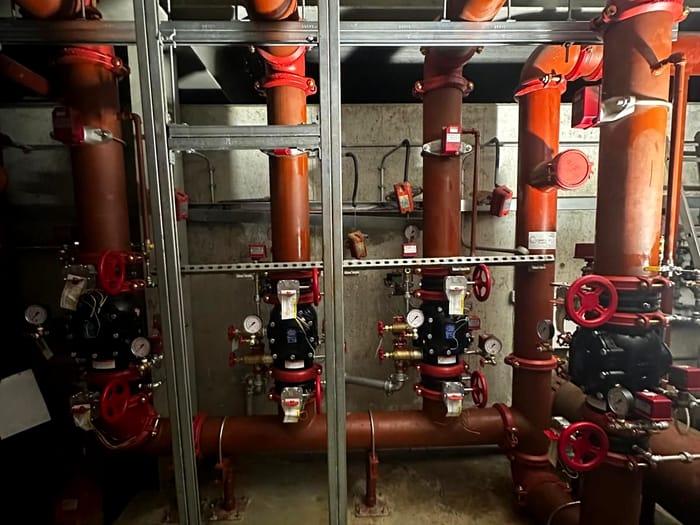
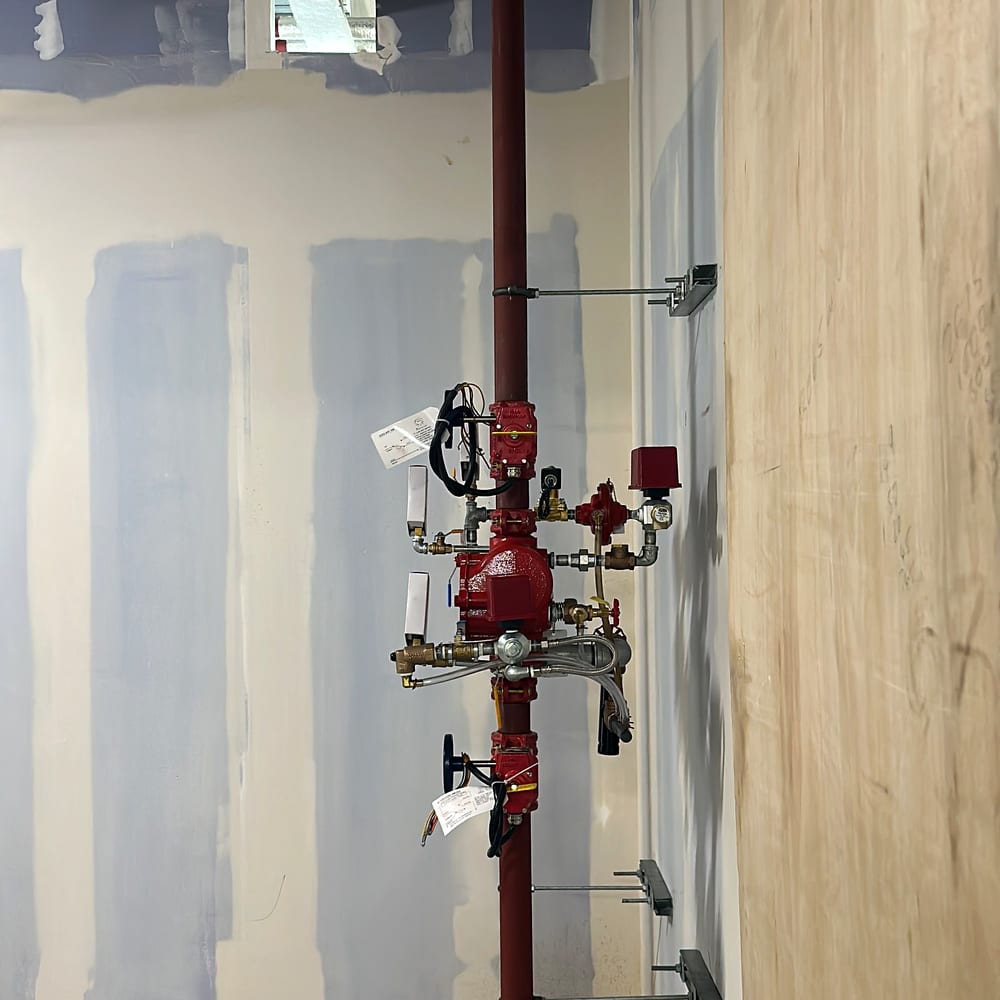
Water flowing through the pipes lifts the alarm valve at the riser, which sounds the water motor gong on the outside wall and, through a pressure or flow switch, signals the fire alarm (clause 16.1.1). So a sprinkler system does raise the alarm, but only once a head has opened. It cannot warn you about smoke before there is heat.
If you are not sure what is fitted in your building, or whether the heads are the right rating for the space, a routine sprinkler service checks exactly that.
This work, on our sites
Questions we get asked
What temperature does a fire sprinkler go off at?
The most common rating in UK buildings is 68 °C, the red glass bulb, with 74 °C close behind. BS EN 12845 says a head must be rated close to, but no lower than, 30 °C above the highest temperature the space normally reaches, so heads near roof glazing, ovens or heaters are rated higher, up to 93 °C or 100 °C and beyond.
Is there a smoke detector inside a sprinkler head?
No. A sprinkler head has no electronics, no wiring and no detector of any kind. The only sensing part is the glass bulb or the soldered link, and it responds to the temperature of the air around it. Smoke detectors belong to the fire alarm, which is a separate system.
Can cooking or a steam shower set off a sprinkler?
Not in a correctly designed system. Steam and cooking fumes do not get a bulb anywhere near its rating. What does cause unwanted operation is a head knocked by a forklift or a ladder, or one fitted too close to a source of radiant heat, which is why heads at risk of impact must have metal guards.
Where this comes from
- BS EN 12845Fixed firefighting systems. Automatic sprinkler systems. Design, installation and maintenance
The standard commercial and industrial sprinkler systems are designed, installed and maintained to. It sets the weekly, monthly, quarterly and annual routines.
BSI
- LPC RulesLPC Rules for Automatic Sprinkler Installations, incorporating BS EN 12845
The insurer-facing ruleset that sits alongside BS EN 12845. Part 1 is the standard itself; the technical bulletins in Part 2 are what an insurer means by property protection.
Fire Protection Association
British Standards are copyright documents and most are bought rather than read free. We hold the ones we work to. If you need to know what one of them says about your building, ask us rather than buying it.
Read on
- How a fire sprinkler system actually works Each sprinkler head is held shut by a heat-sensitive glass bulb or fusible link, so only the heads directly over a fire open. The resulting flow drops the pressure in the pipework, which starts the pump and operates the alarm.
- How long do fire sprinkler heads last? A fire sprinkler head has no fixed expiry date under the UK rules: it stays in service for as long as it passes inspection, which is often decades. Sentry Sprinkler Protection replaces heads that are painted, corroded, damaged or have operated, and samples them for testing once a system reaches 25 years.
- How does a sprinkler alarm valve work? A sprinkler alarm valve is a one-way valve at the base of the riser. When a head opens, water flows up through it, the valve's clapper lifts, and that opens a port that sends water to the alarm gong on the outside wall and trips a pressure switch to the fire alarm, explains Sentry Sprinkler Protection.
- How far apart do fire sprinklers need to be? Under BS EN 12845, ceiling sprinklers in the UK can be up to 4.6 m apart in a light hazard building, 4.0 m in ordinary hazard and 3.7 m in high hazard, and never closer than 2 m. Each head covers at most 21, 12 or 9 square metres, explains Sentry Sprinkler Protection.